

Energy audits, M&V and EPC verification
Measured,
not estimated.
A Registered ESCO that owns its instruments and publishes its fees. After the free preliminary audit we will tell you whether we can guarantee the detailed audit finds savings worth at least its fee.
If we don’t find savings worth the audit fee,
you don’t pay for the audit.
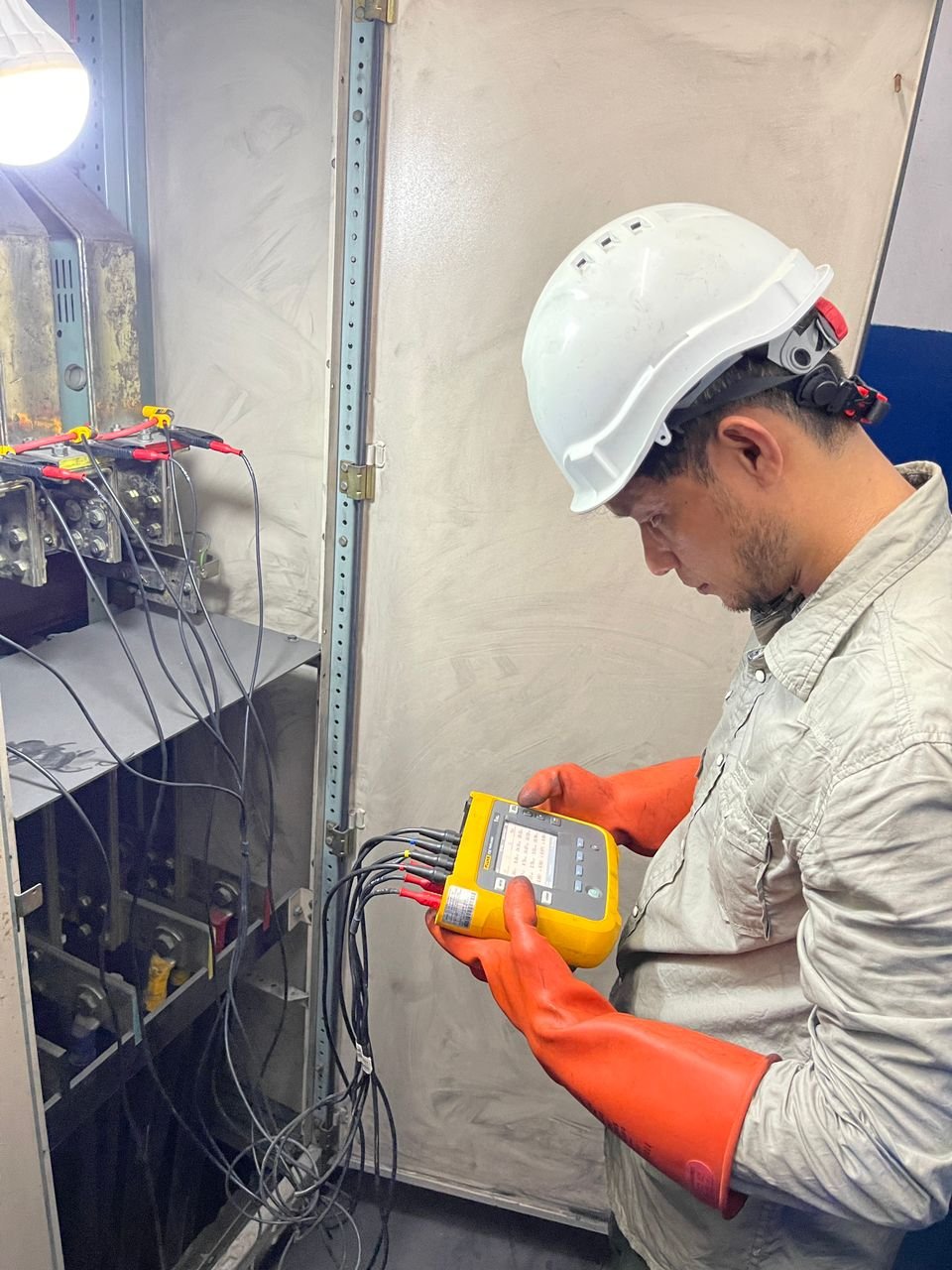
Three-phase power quality analyser on a low-voltage switchboard. Kuala Lumpur, 2026.
Registered ESCO
Work delivered under
EECA 2024 · Suruhanjaya Tenaga
Audits to
GP/ST/No.49/2024 (Pind. 1/2026) · ASHRAE Level II · ISO 50002
Reports signed by
Registered Energy Auditor · JTB-2025-0063/001
Three things, all delivered in-house.
Which is why we can show you the instruments and publish the fees. Implementation finance comes through partner ESCOs where a balance sheet is needed; the measurement never leaves us.
Energy audits
- Preliminary audit. Document review and site walk-through. Free.
- Plant and system audits. Chiller plants, boiler plants, heat pump systems, compressed air systems and main switchboards, scoped one system at a time.
- Detailed Energy Audit. ISO 50002 sets how the audit is run, ASHRAE Level II how deep it goes, and GP/ST/No.49/2024 (Pind. 1/2026) what the report must contain — the eleven sections the Commission requires of the Registered Energy Auditor who signs it. Seven to fourteen days of on-site logging.
- Investment-grade audit. Thirty days of logging and a calibrated model built on a full billing cycle, for financing.
- BEI benchmarking. Building energy intensity and star rating to GP/ST/No.48/2024 (Pind. 1/2026).
Measurement & verification
- Baseline establishment. IPMVP option selection, instrumented baseline, protocol document.
- Post-implementation verification. Did the savings actually materialise?
- Annual M&V. Reported each year against the agreed baseline.
EPC verification
- Independent savings verification. For the building owner, checking the numbers.
- Dispute investigation. Where owner and ESCO disagree on what was delivered.
- Carve-out metering design. So your own capital projects are not swallowed by an existing EPC boundary.
A walk-through produces an opinion. These produce a baseline.
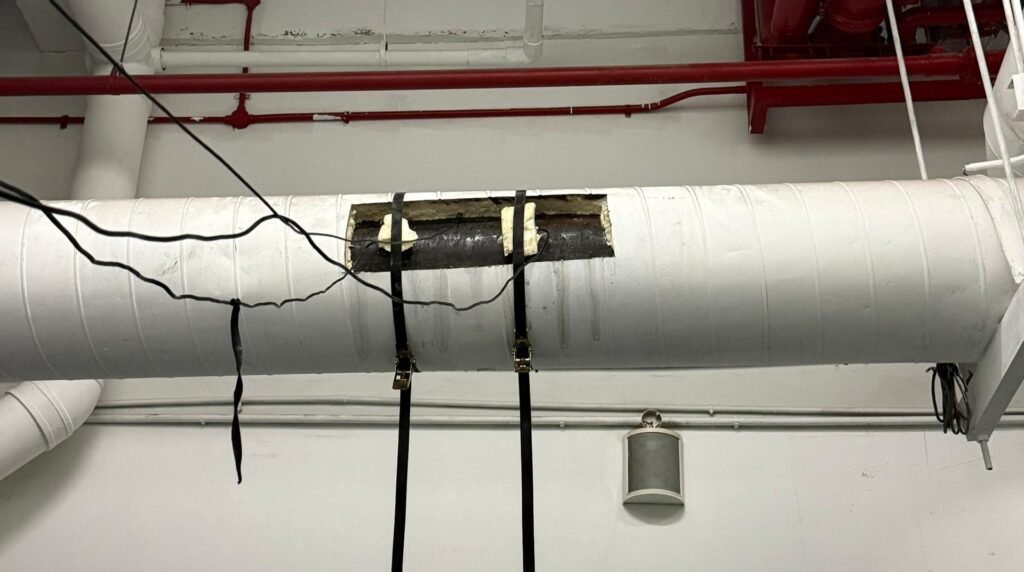
Clamp-on ultrasonic transducers, chilled water riser. Logged in place, no pipe penetration.
01
Desktop data
Twenty-four months of bills, tariff, operating data and equipment specifications. A Detailed Energy Audit works from thirty-six.
02
Field logging
Loggers and transducers recording across a full operating cycle.
03
Cross-checking
Desktop analysis reconciled against what the instruments actually measured.
04
Load apportioning
Consumption split across ACMV, lighting, compressed air and process loads.
05
ESM development
Each measure costed, with saving, payback and assumptions stated.
06
Reporting
Issued in the form the recipient needs: regulator, lender, board or ESCO.
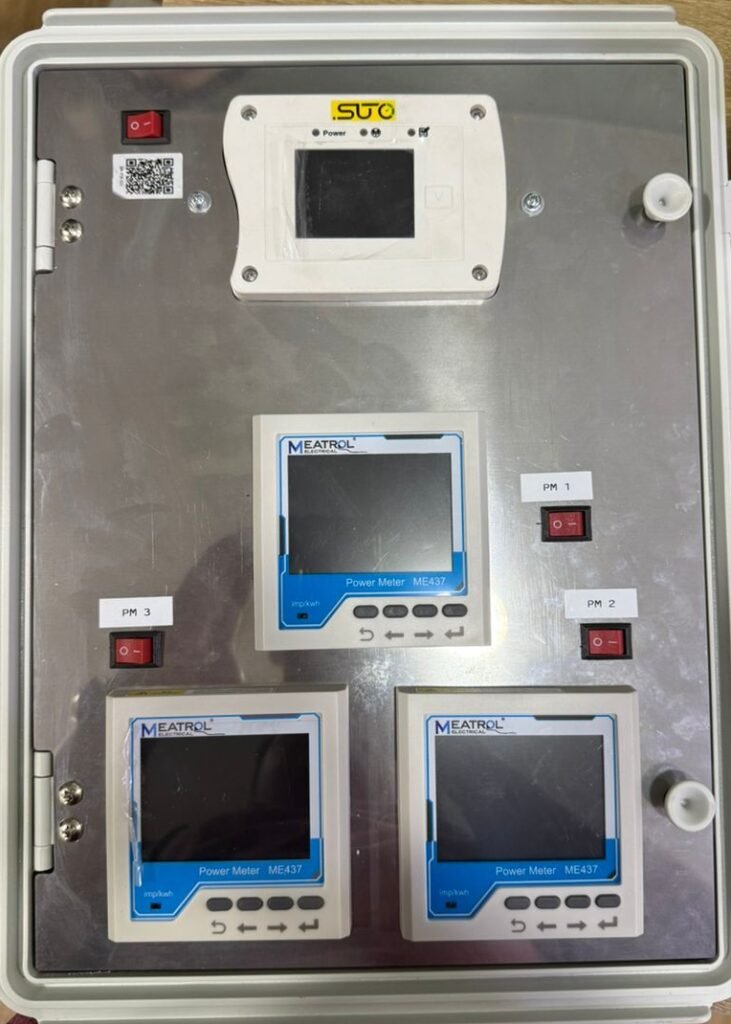
Chiller efficiency logging kit — one SUTO ultrasonic flow meter and three Meatrol ME437 power meters in a single enclosure, on a common clock.
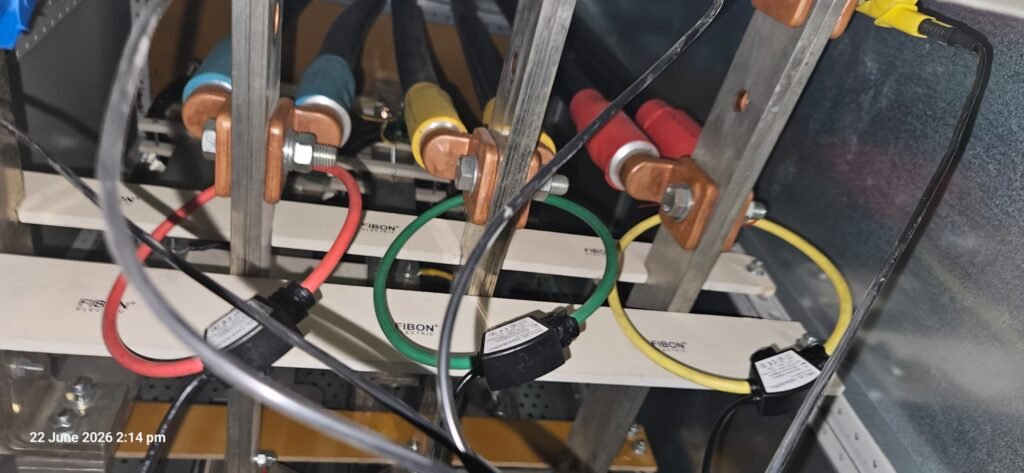
Rogowski coil current transducers on busbars.
The registrations that have to be behind the signature.
An energy audit report submitted under EECA 2024 is only valid if the right person signs it. These are the registrations Innovast holds, and what each one does on a project.
REA
Registered Energy Auditor
Signs the energy audit report submitted to Suruhanjaya Tenaga under EECA 2024. The registration is held in-house.
Practising certificate JTB-2025-0063/001
REM I & II
Registered Energy Manager
Appointed from among your own employees within three months of the notice. An external appointment is the exception: Type II only, for up to three years, then back to an employee. We hold both types, and take external Type II assignments.
CEM
Certified Energy Manager · AEMAS
Energy management practice across the audit, the EnMS build-out and the measures that follow from them.
CPMV
Certified Practitioner in Measurement & Verification
IPMVP option selection, baseline construction and savings verification. The qualification behind every M&V and EPC verification engagement.
Ir. P.Eng
Professional Engineer · Board of Engineers Malaysia
Instrumentation and metering design, logging set-up and the electrical engineering behind how a site is measured.
GBIF
Green Building Index Facilitator · Professional Architect
Building envelope, passive design and green-rating work, on engagements where the fabric is in scope as well as the plant.
Registrations are held by the Innovast team and its retained specialists. Named individuals and numbers appear in the engagement letter and on the signed report.
The rule every Innovast audit is held to
Where a figure is estimated rather than measured, the report says which it is.
Where we have done this.
Client names are held under non-disclosure, so engagements are described by facility type, location and scope. The technical detail is the part that tells you whether we can do your building.
Commercial office tower
Kuala Lumpur
EACG Detailed Energy Audit. Chiller plant, main switchboard and sub-circuit logging, with nine energy saving measures developed, costed and reported.
Partner ESCO
Multi-tower REIT portfolio
Kuala Lumpur
EECA 2024 audit across the portfolio, with building energy intensity and star rating to GP/ST/No.48/2024 (Pind. 1/2026).
Direct
Pharmaceutical manufacturing
Selangor
EACG Detailed Energy Audit followed by a 26-point energy monitoring system across three production buildings. Grant managed end to end.
Direct
We also work the other way round. A share of our audit and M&V scope is delivered as technical subcontractor to other ESCOs who hold the client relationship: white-label audits, IPMVP baselines and instrumentation on projects that are not ours. If you are an ESCO with audit or measurement overflow, that is a conversation we are open to. Discuss an M&V assignment.
Sectors we work in
- Manufacturing
- Pharmaceutical
- Rubber and polymer
- Petrochemical and refining
- Industrial minerals
- Palm oil and agro-processing
- Commercial office
- REIT-managed portfolios
- Shopping malls
- Hotels
- Government buildings
- Water and sewage treatment
- Aviation
Timing
Nothing starts until the notice arrives. Then a year is not long.
EECA 2024 applies where consumption reaches 21,600 GJ or more over twelve consecutive months, assessed across all applicable energy categories for an activity carried out in one place, not electricity alone. The written notice under section 3(3) is the operative step, and every statutory clock runs from it.
Day 0
Section 3(3) written notice issued by Suruhanjaya Tenaga. Before this, no statutory clock is running.
Within 3 months
Registered Energy Manager appointed. An external REM is permitted for up to three years from the notice, and must be Type II. reg. 4(2), 6(1), 6(4)
Within 12 months
First energy audit report submitted, scoped, logged, analysed, written and signed by a Registered Energy Auditor. reg. 10(1)(a)
Then every 5 years
On the fifth year, for every five years from the date the last report was submitted. reg. 10(1)(b)
Twelve months is less room than it reads. A Detailed Energy Audit needs a baseline built from the billing history, seven to fourteen days of logging on site, analysis, ESM development and a report the REA is willing to sign. Add procurement and internal approval at your end and the working year is considerably shorter than the statutory one.
The EE&C report runs on a separate clock anchored to the REM’s appointment, not the notice, so the two do not fall due together. The Act, the Regulations and the guidelines, set out in full →
Benchmarking
Where your building sits, before you commit to anything.
Office buildings of 8,000 square metres or more are rated one to five stars on the energy they use for their countable floor area, under GP/ST/No.48/2024 (Pind. 1/2026). Two things decide the number and both are easy to get wrong: how the floor area is counted, and which of the two rating scales applies to the building. The energy intensity label, explained →
The energy intensity label itself is a separate duty. It is triggered by a written notice under section 3(4), not the section 3(3) designated-consumer notice, and the two do not arrive together.
Most ESCOs will not publish a number.
A facility manager building a budget case needs one before the first meeting. All figures below are indicative starting points for a direct engagement. Final scope and fee are set after the free preliminary audit. ESCO partners and white-label M&V: rates on application.
Fees
Plant and system audits
Preliminary energy audit
Qualification stage
Twenty-four months of bills, tariff and asset list reviewed, plus a site walk-through. You get an indicative savings range and a recommendation on scope.
No fee
MSB load distribution audit
Where the load actually sits. The cheapest way to find out which system deserves the next audit.
Starts fromRM5,000
Heat pump system audit
Per plant
COP measured across the operating range, against the load the plant actually serves.
Starts fromRM5,000
Compressed air system audit
Leakage, pressure profile, specific power and load/unload behaviour.
Starts fromRM10,000
Boiler plant audit
Fuel input against measured thermal output. Combustion efficiency, stack losses and load profile.
Starts fromRM10,000
Chiller plant audit
Power, flow and delta-T logged simultaneously across the plant, so kW/RT is a measurement rather than a calculation from separate readings.
Starts fromRM10,000
Site-wide audits and compliance
Investment-grade audit
Thirty days of logging plus a calibrated energy model on a full billing cycle, where a lender or ESCO must be satisfied. Carried by the contract if an EPC follows.
Starts fromRM40,000
Detailed Energy Audit
Single site, EECA 2024 / ASHRAE Level II / ISO 50002
The compliance audit. Seven to fourteen days of on-site logging across a full operating cycle, against a baseline built on thirty-six months of billing history. Signed by a Registered Energy Auditor.
Starts fromRM50,000RM80,000 industrial
Implementation
Energy Performance Contract
Implementation funded from verified savings, where you agree to proceed. We size the savings, set the baseline to IPMVP and verify the result; the capital and the savings guarantee sit with the contracting ESCO or funder.
No CAPEX from you
Measurement and verification is priced separately. See measurement and verification.
Every site is scoped individually, so these figures are starting points rather than quotations. Final scope and fee follow the free preliminary audit.
All figures are for Peninsular Malaysia. Innovast is a Registered ESCO with Suruhanjaya Tenaga; work in Sabah and Sarawak falls under separate territorial registrations and is not quoted from this ladder.
SEDA EACG
The grant that pays for the audit.
Where the installation qualifies — 100,000 kWh a month or more — the Energy Audit Conditional Grant carries up to RM60,000 of a commercial audit and up to RM100,000 of an industrial one. For the 2026 implementation year SEDA has allocated the programme across 52 commercial buildings and 56 industrial premises nationwide.
Innovast manages eligibility, the application, the audit, the report and the claim.
Administered by SEDA Malaysia under the RMK-13 Terms of Reference, February 2026. Grant values and eligibility are subject to prevailing SEDA terms.
If we don’t find savings worth the audit fee, you don’t pay for the audit.
Most facilities commissioning a first audit have never had one, and there is almost always room. After the free preliminary audit we tell you whether we are prepared to guarantee the outcome on your site. Where we are, it goes into the engagement letter.
Where a new or already-optimised facility means we cannot offer that in good conscience, we will say so before you spend anything.
Why the preliminary audit comes first. A new plant, or one that has already been optimised, is usually better served by an M&V programme than by a general energy audit: verifying that it is operating as designed, or confirming what an earlier implementation actually delivered. That is a different piece of work with a different deliverable, and we would rather point you at it than sell you an audit with nothing left to find. Reviewing the bills and walking the site is how we tell the difference before either of us commits.
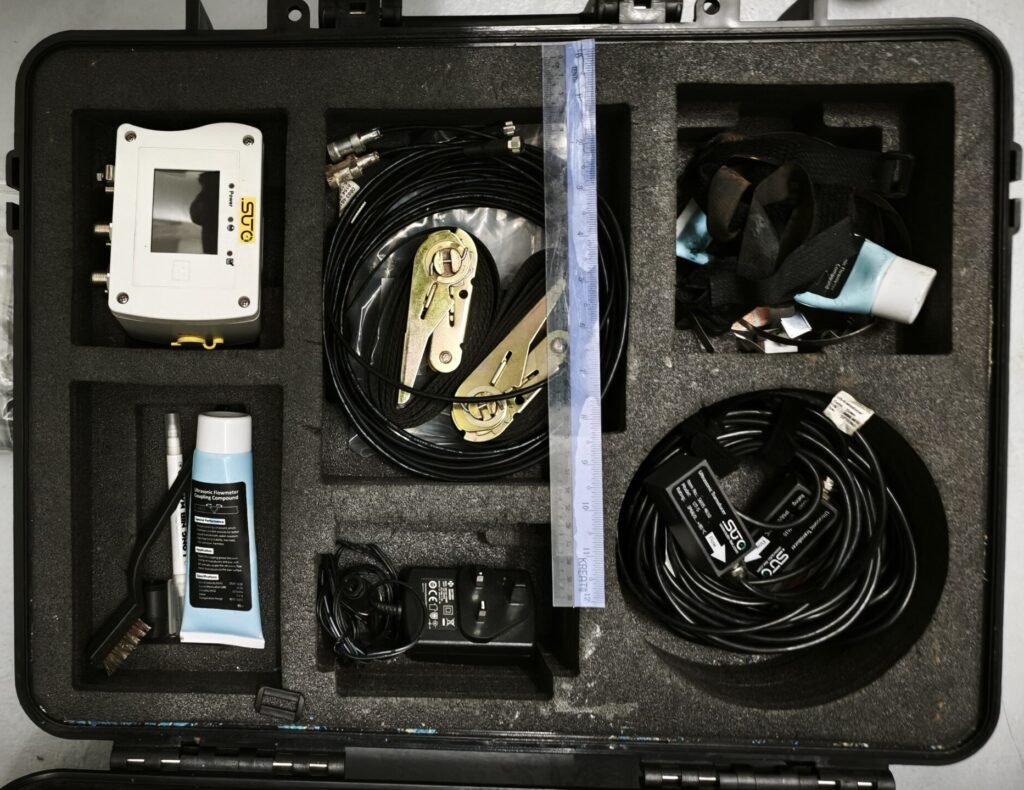
SUTO ultrasonic flow meter kit. Calibrated; certificates on request.
How it works: illustrative terms
- The threshold. Measures worth at least the audit fee in annual identified savings. The fee is the one stated in the engagement letter.
- If we don’t reach it, you don’t pay the audit fee. That is the whole remedy, and it is written into the engagement letter.
- What we guarantee is the finding. Measures identified, costed and reported with savings and payback. Not that you implement them, and not that the saving is realised on site. That is what M&V and an EPC are for.
- What we need from you. Site access, thirty-six months of billing data for a Detailed Energy Audit (twenty-four for the preliminary), an asset list, and permission to leave logging in place for the agreed period.
- When it is agreed. After the free preliminary audit, never before, and site by site.
Illustrative only. The engagement letter is agreed per site and terms vary by client. Where the two of us disagree about whether identified savings are real, either party may refer the findings to an Energy Performance Contracting partner within 90 days; a written offer to fund implementation out of those savings settles it.

Send us twenty-four months of bills and an asset list.
That is the whole ask. Twelve months is enough to check whether you cross the EECA threshold; twenty-four is the minimum we work from for an audit, and longer is better still, because it is what lets us benchmark and compare year on year. The preliminary audit carries no fee.
What comes back, in about two weeks
- An indicative annual savings range
- Whether you reach 21,600 GJ over twelve consecutive months at that installation
- A recommendation on audit scope: plant, system or site-wide
- An assessment of likely EACG grant eligibility
- Our answer on the savings guarantee
No fee, and no obligation to proceed.