

Two lines of work.
Energy audits and measurement and verification, delivered in-house with instruments we own — and the Energy Performance Contracting, Registered Energy Manager and EECA 2024 compliance work that follows from them. Peninsular Malaysia.
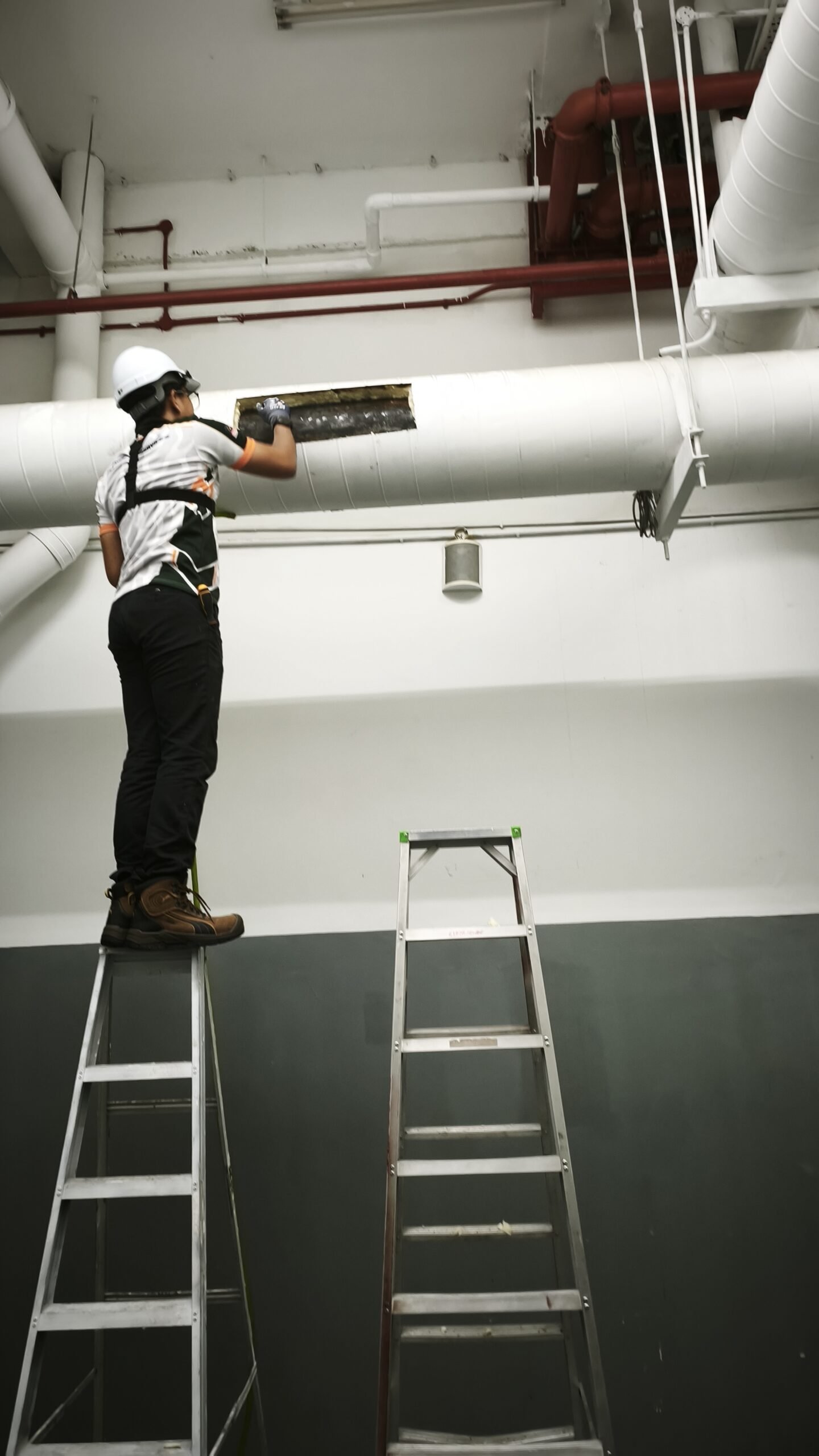
Fitting flow measurement transducers to insulated chilled water pipework at high level.
Registered ESCO
Work delivered under
EECA 2024 · Suruhanjaya Tenaga
Audits to
GP/ST/No.49/2024 (Pind. 1/2026) · ASHRAE Level II · ISO 50002
Reports signed by
Registered Energy Auditor · JTB-2025-0063/001
Start here
Three ways this usually starts.
Most readers arrive here from one of three places. Each one has a different first move, and only one of them is urgent.
Category one
Energy audits and measurement.
Delivered in-house, by our own people, using instruments Innovast owns. That is what allows every fee to be published.
- Preliminary audit. For anyone deciding where to start — and the point at which we tell you whether we are prepared to guarantee the outcome on your site.
- Energy intensity label and star rating. For anyone in charge of an office building of 8,000 square metres or more, who needs a defensible number for the annual filing, a tender or a board paper.
- MSB load distribution audit. For a facility manager who needs to know which system deserves a full audit before committing budget to one.
- Heat pump system audit. For hotels, hospitals and process sites carrying a significant hot water load.
- Compressed air system audit. For manufacturing sites where compressed air is a major utility.
- Boiler plant audit. For process and hospitality sites running steam or hot water plant.
- Chiller plant audit. For any building where the chiller plant is the largest single load.
- Detailed Energy Audit. For a designated consumer whose first energy audit report is due within one year of the section 3(3) notice.
- Investment-grade audit. For an owner or funder deciding whether to commit capital, and the first step in any Energy Performance Contract.
- Measurement and verification to IPMVP. For anyone about to spend capital on savings they will later have to prove.
- EPC savings verification. For a building owner already inside an EPC.
No fee
Preliminary audit · Energy intensity label rating
Starts fromRM5,000
Plant and system audits — main switchboard, heat pump, compressed air, boiler, chiller
Starts fromRM15,000
EPC savings verification
Starts fromRM50,000 commercialRM80,000 industrial
Detailed Energy Audit, single site
These are entry points. Every fee is published in full on its own deep page: the audit ladder on the audits page, the two measurement and verification fees on measurement and verification, and the energy intensity label rating on energy intensity label. All figures are indicative starting points for a direct engagement, and final scope and fee are set after the free preliminary audit — these are not quotations. ESCO partners and white-label M&V: rates on application.
Category two
Contracts, appointments and submissions.
Where the measurement turns into a funded project, a statutory appointment, or a filing with a date on it.
- Energy Performance Contracting. For a facility with identified measures and no capital budget to implement them.
- Registered Energy Manager outsourcing. For a designated consumer with three months to appoint and nobody registered on the payroll.
- EnMS design and implementation. It comes with a Registered Energy Manager assignment or an audit engagement; we do not sell it on its own.
- EECA compliance management and EE&C reporting. For anyone holding a notice who wants the dates held by someone whose job it is.
- SEDA EACG grant management. The Energy Audit Conditional Grant handled end to end — eligibility, application, the audit, the report and the claim. The grant carries up to RM60,000 of a commercial audit and up to RM100,000 of an industrial one, where the installation uses 100,000 kWh a month or more. For the 2026 implementation year SEDA has allocated the programme across 52 commercial buildings and 56 industrial premises nationwide. For sites that qualify and want the audit part-funded.
Starts fromRM12,000 a year
Registered Energy Manager assignment, one installation
No CAPEX from you
Shared savings and energy supply contracting — the capital sits with the contracting ESCO or funder
Registered Energy Manager assignments are scoped and priced per installation, as their own engagement. They are not folded into an audit fee or a compliance package, and portfolio and multi-site assignments are priced per site on scope. Both attendance tiers and the full EECA compliance package are published on the ESCO page. These are not quotations.
In-house, and with partners
Where the measurement sits.
Every audit and every measurement and verification engagement on this page is delivered in-house, by Innovast people, using instruments Innovast owns.
Instruments Innovast ownsSUTO ultrasonic flow meters, calibrated, certificates available on request; the chiller efficiency logging kit, one ultrasonic flow meter and three Meatrol ME437 power meters in a single enclosure recording on a common clock; Rogowski coil current transducers; temperature loggers; power quality analysers.
The people who install the loggers write the report, and a Registered Energy Auditor signs it. That is what allows the fees to be published — we know what the work costs because we do it. Who is registered on your job.
Implementation is delivered with partner ESCOs. The capital and the savings guarantee sit with the contracting ESCO or the funder. Innovast does not own or operate plant and does not itself take the savings guarantee: we size the savings, set the baseline, source the counterparty, and verify the result each period.
Our fee does not move with the savings figure. The party that guarantees the savings has a reason to want the number to be large, and the party that pays for them has a reason to want it small. We are paid to measure it.
Innovast also delivers audit and measurement scopes as technical partner to other ESCOs. Those are arrangements between ESCOs, and the figures on this page are direct engagement only.
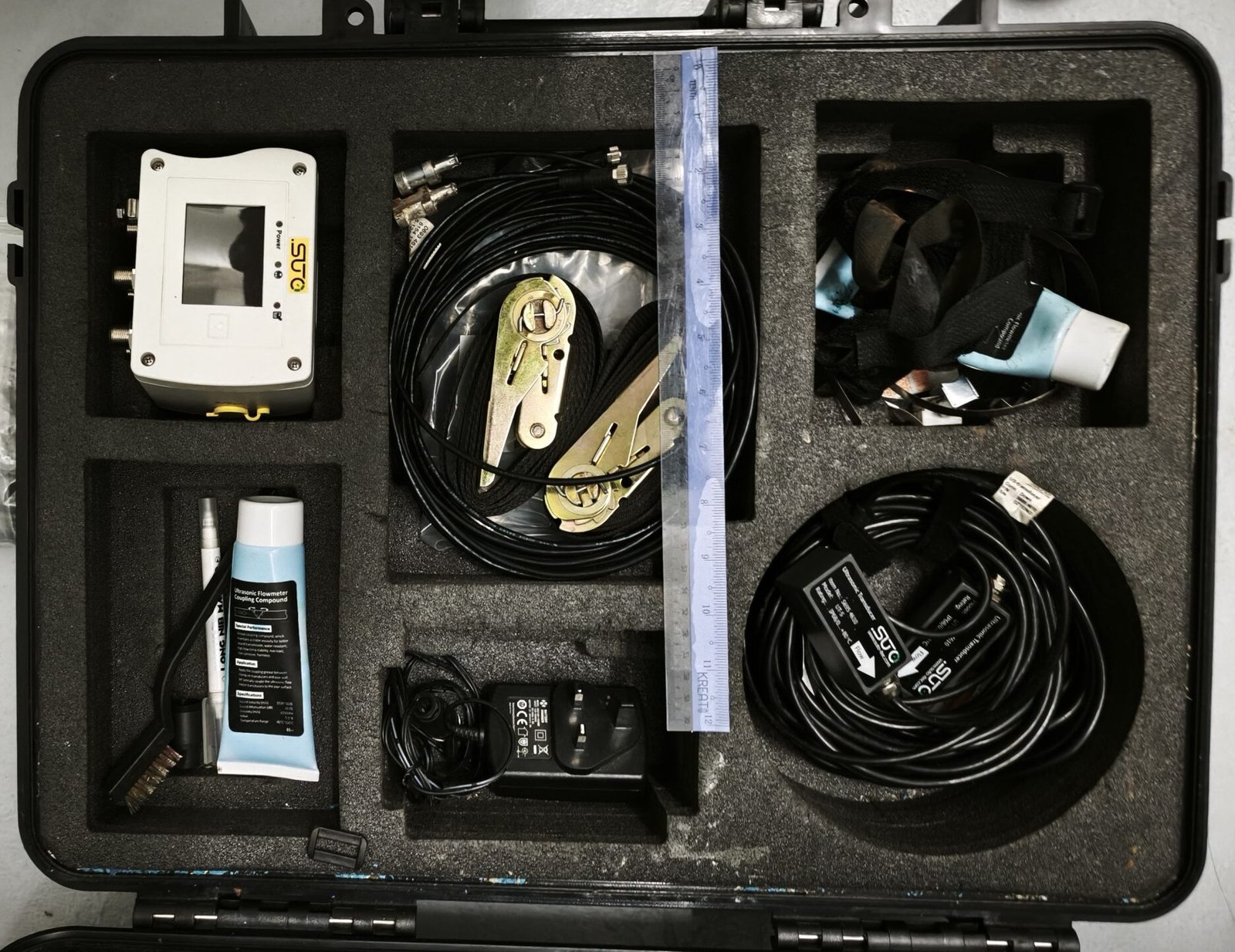
SUTO ultrasonic flow meter kit. Calibrated; certificates on request.
Where to start
Start with the preliminary audit.
It costs nothing. A site walk-through, twenty-four months of bills and the asset list, and a written recommendation of what to audit and what it will cost. It is also the point at which we tell you whether we are prepared to guarantee the outcome on your site. Where a facility is new or already well run, we will say so before you spend anything.
Does EECA 2024 reach you?
EECA 2024 applies where consumption reaches 21,600 GJ or more over twelve consecutive months, assessed across all applicable energy categories for an activity carried out in one place — not electricity alone.