

About Innovast
The registration belongs to a person. The work needs a firm.
We measure where the energy goes in a factory or a building, and work out what is worth fixing. Innovast Sdn Bhd is an Energy Service Company registered with Suruhanjaya Tenaga, incorporated in 2022. Under EECA 2024 the Energy Commission appoints a named person to this work, not a company. So this page is about who that person is on your job, and what the firm around them does.
The preliminary audit costs nothing.
Registered ESCO
Work delivered under
EECA 2024 · Suruhanjaya Tenaga
Audits to
GP/ST/No.49/2024 (Pind. 1/2026) · ASHRAE Level II · ISO 50002
Reports signed by
Registered Energy Auditor · JTB-2025-0063/001
The work
What we actually do.
Four lines of work. Most sites start with the first one and stop there, and that is fine.
1 · Energy audits
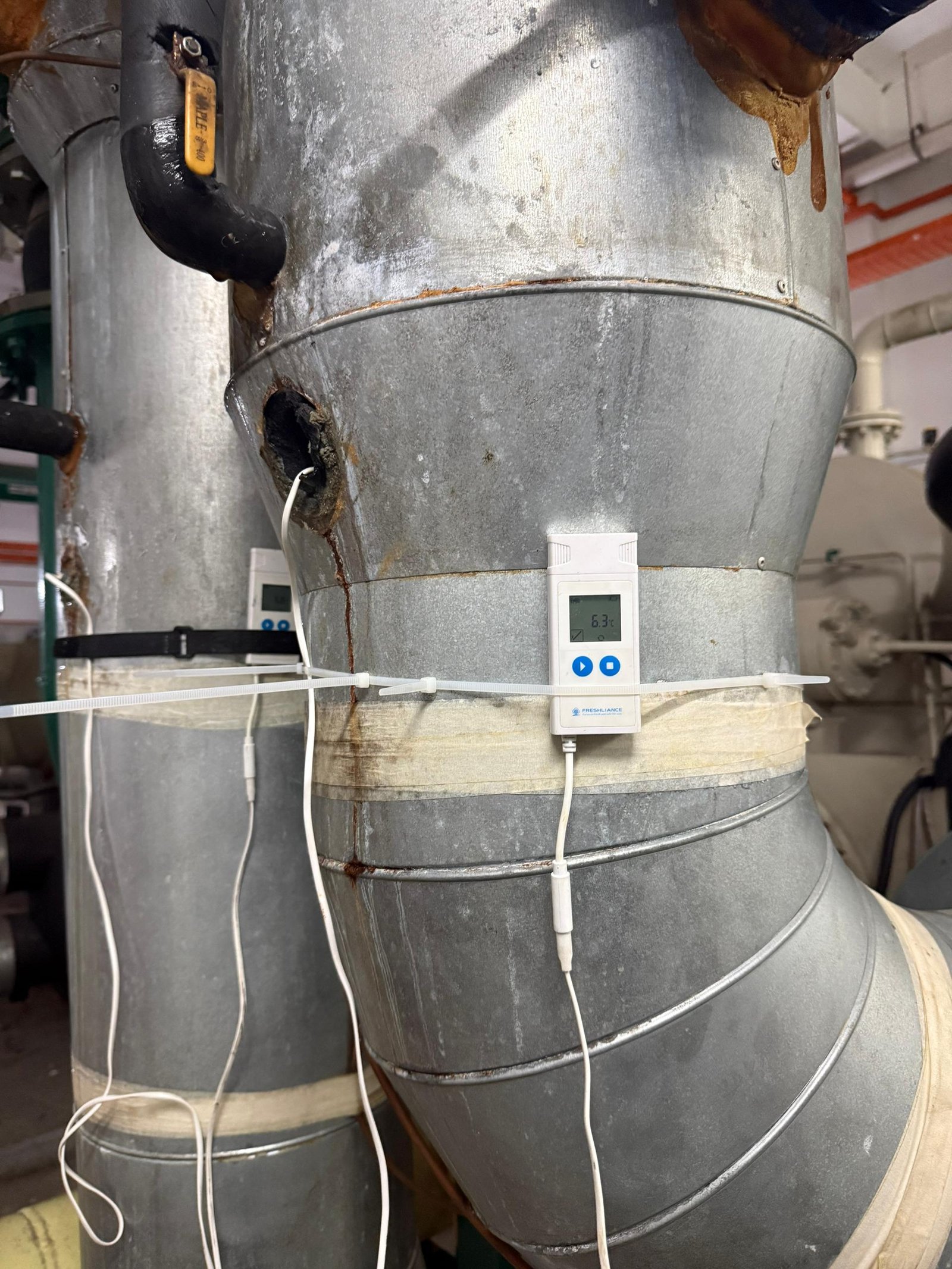
We measure where your energy goes and what it costs you, then say what to fix and what each fix is worth. Three scopes. A free preliminary audit off your bills and a site walk. A detailed audit with our own loggers on your plant. An investment-grade audit with extended logging and a calibrated model.
2 · Checking savings are real
Someone tells you a project will save you energy, and puts a number on it. We check whether that number is real, independently, to IPMVP. We set the baseline before the work starts. Then we verify the result for as long as the contract runs. This is the part of the market almost nobody sells, and it is the part we would most like to be known for.
3 · Energy management and reporting
An energy management system you can keep running, the annual report EECA 2024 asks for, and a Registered Energy Manager where you need one. The same measured numbers then feed group ESG and Bursa reporting, so you are not collecting the data twice.
4 · Energy Performance Contracting
Sometimes a fix is clearly worth doing and the capital is the problem. We size the saving, set the baseline, find the party willing to fund it, and verify the result. On a shared savings or energy supply contract there is no CAPEX from you, because the capital sits with the contracting ESCO or the funder.
What we do not do
We do not own or operate plant and we do not install equipment. We are not a contractor and we are not selling you a machine. That is what keeps the measurement worth something.
Where to start
The preliminary audit is free and it is the right first step for almost everyone. It takes about two weeks. At the end you know whether there is a saving worth chasing and roughly what it would cost to go after it.
How the law works
The Commission appoints a person, and that person carries the duty.
Worth understanding before you compare providers. It changes what you are actually buying.
What the regulations say
An external Registered Energy Manager is appointed under regulation 6(1), and the appointment is of a named individual. Regulation 6(2) requires the Commission to be told who that individual is. The duties in section 5(2) of Act 861 are that person’s duties. Section 5(4) puts a fine of up to twenty thousand ringgit on them personally for failing them.
The audit works the same way. Section 8(2) requires you to appoint a Registered Energy Auditor. Section 9(1) makes preparing the report theirs.
What that means on your site
The registered professional on your engagement sets the scope, chooses the method, reviews the analysis and signs the result. They are on the job, not at the end of it.
The firm around them resources the work. Instruments installed and collected. Data logged and cleaned. Analysis run and the report produced. All of it under that registrant’s direction and to their standard. This is ordinary professional practice, and it is how an engineering or audit practice of any size operates.
Why we say it out loud
Some providers treat the registration as a signature collected at the end. The registered person barely sees the site. That does not survive a question from the Energy Commission, and it is your report that gets sent back.
So ask any provider three things. Who holds the registration. What will that person actually do. What are they signing.
Why not just hire the individual
You can appoint an individual. Here is what a firm adds.
A registered individual can hold your appointment, and plenty do. The difference is not competence. It is structure.
Who benefits when your team gets better
An individual registrant has no reason to build your internal capability, because your capability is the end of their engagement. A firm scoped to hand the appointment back does.
This is not a criticism of anyone. It is just what you are paying for in each case.
Cover and review
One person brings one calendar and one specialism. Your site has chillers, compressed air, a switchboard and possibly a boiler, and no single registrant is strongest on all of them.
A firm puts more than one pair of eyes on the same plant and checks its own work before you see it. You get a process you can look at, not one person’s habits.
What this is not
Outsourced energy management only works where the site itself intends to improve. Compliance is the floor. If the floor is all you need, say so and we will scope to it and price it accordingly.
The firm model earns its money above the floor, and it cannot want that more than you do.
The clock nobody quotes you
Your three years started before you appointed anyone.
An external Registered Energy Manager appointment runs for a period not exceeding three years from the date of the section 3(3) notice. Not from the date you appoint.
The arithmetic
The letter arrives. You take eight months to shortlist, procure and appoint. Your external appointment now has about two years and four months left, not three.
The window shrinks by exactly the time you spend deciding. Nobody sends you a reminder.
And it pushes the other way too
Two duties run from the appointment date instead. The energy management system is due within one year of the appointment, under regulation 8. The first energy efficiency and conservation report is due within thirty days after that year, under regulation 9(a).
So a slow appointment shortens the external window and pushes the reporting cycle later at the same time.
What happens at the end
When the regulation 6(1) appointment expires, regulation 6(4) requires you to appoint a Registered Energy Manager from among your own employees. That is the design of the law.
We can continue afterwards as consultants if you want us. That is advisory work, not a regulated appointment, and we will not describe it as one.
So the question to ask a provider is not what they will do for three years. It is what your own team will be able to do on the day it ends.
The people
Who is registered, and how you learn who is on your job.
The firm’s registration is above and you can check it. Below are the people. Anyone not named here is named to you at the point it matters.
Anslem Lim
Principal. Holds every client relationship and runs the engagement day to day.
Certified Energy Manager (CEM)
AEMAS Certified
Ir. Fakran Nor Rijam
Instrumentation and metering systems.
Professional Engineer — Instrumentation & ControlBoard of Engineers Malaysia
Zulhelmi Zulkifly
REA signatory and lead auditor on direct engagements.
Registered Energy Auditor (REA)Practising certificate JTB-2025-0063/001
Certified Practitioner in Measurement and Verification (CPMV)
Grid Connected PV (GCPV) Certified
Amirul Farhan
Electrical support across the practice.
Electrical Engineer
Certified Energy Manager (CEM)
AEMAS Certified
Registrations can be checked on the Suruhanjaya Tenaga register.
Everyone else, by registration class and role
The rest of the practice is listed here by what they are registered to do, not by name. Not everyone who works on an Innovast job works only for Innovast, and publishing a name can put someone’s employment at risk.
You still get the names that matter, before you commit. The proposal names the Registered Energy Auditor who will sign your report, and the Registered Energy Manager who will hold your appointment where the job includes one. If either changes, we tell you.
- Registered Energy Auditor
- Registered Energy Manager · Type I
- Registered Energy Manager · Type II
- Certified Energy Manager
- Green Building Index Facilitator
- Professional Architect
- Professional Engineer
- Technologist
What we are building
InnoSense, and where it is up to.
InnoSense is our own energy management platform. Cloud-based and multi-tenant. It is being built to carry real-time monitoring and analytics, measurement that follows IPMVP and ASHRAE, and reporting to Suruhanjaya Tenaga and SEDA without rekeying anything. A second phase is in development.
One thing on this page is not finished, and it would be odd to leave it out of a page about what we actually are.
Status
Not launched
It is in build with our development partner. It is not sold as a live product today. Where a job needs monitoring now, we install metering and use a system that already exists.
Tell us if you want to see it first and we will let you know when it is ready. Early sites shape what gets built, so we would rather hear from you now than after it ships.
Start with the free one.
The preliminary audit costs nothing, and it is the only honest way to find out whether we are the right firm for your site. If there is nothing worth chasing, we will tell you, and that is the end of it.
EECA 2024
EECA 2024 applies where consumption reaches 21,600 GJ or more over twelve consecutive months, assessed across all applicable energy categories for an activity carried out in one place. Not electricity alone.
Where this leads
Every fee we charge, and what each buys
The full audit and measurement ladder, the instruments, the logging durations, and the audit-fee guarantee.
Holding the appointment, and handing it back
How an EPC is structured, where Innovast sits in it, and the manager assignments held under regulation 6.
Checking whether a saving is real
Independent measurement and verification to IPMVP, before you sign and every year after.
Energy numbers you can report and defend
The energy management system, the annual EE&C report, and the same measured data turned into group ESG and Bursa reporting.