Most of the saving needs little money.
The first year is no-cost and low-cost work: RM110,510 in all. It saves about RM255,000 a year.
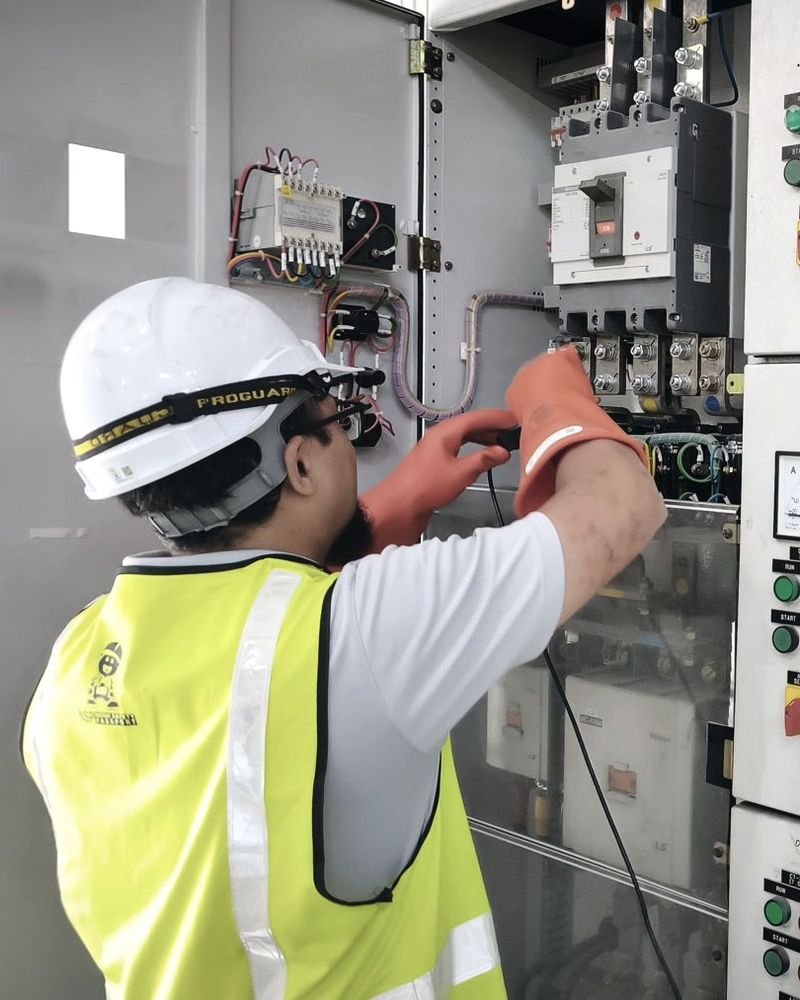
We measure your plant on site with our own instruments, and a Registered Energy Auditor signs the result. We don't sell equipment, and our fee does not depend on the savings figure.
CaseGovernment office complex, Putrajaya: 11.85% energy saving identified, ≈RM282,000 a year, ≈11-month paybackThe commercial building model stands for office towers, shopping malls, hotels, hospitals, universities, government buildings, airports and terminals, and data centres. The factory model stands for manufacturing, pharmaceutical, food and beverage, refining and petrochemical, power and utilities, and water and wastewater treatment sites.
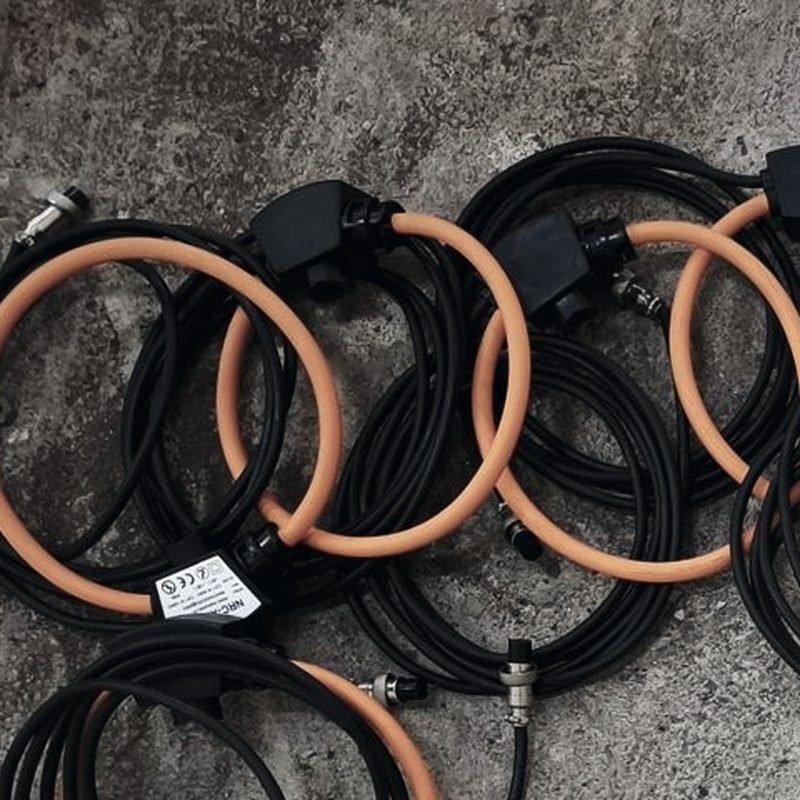
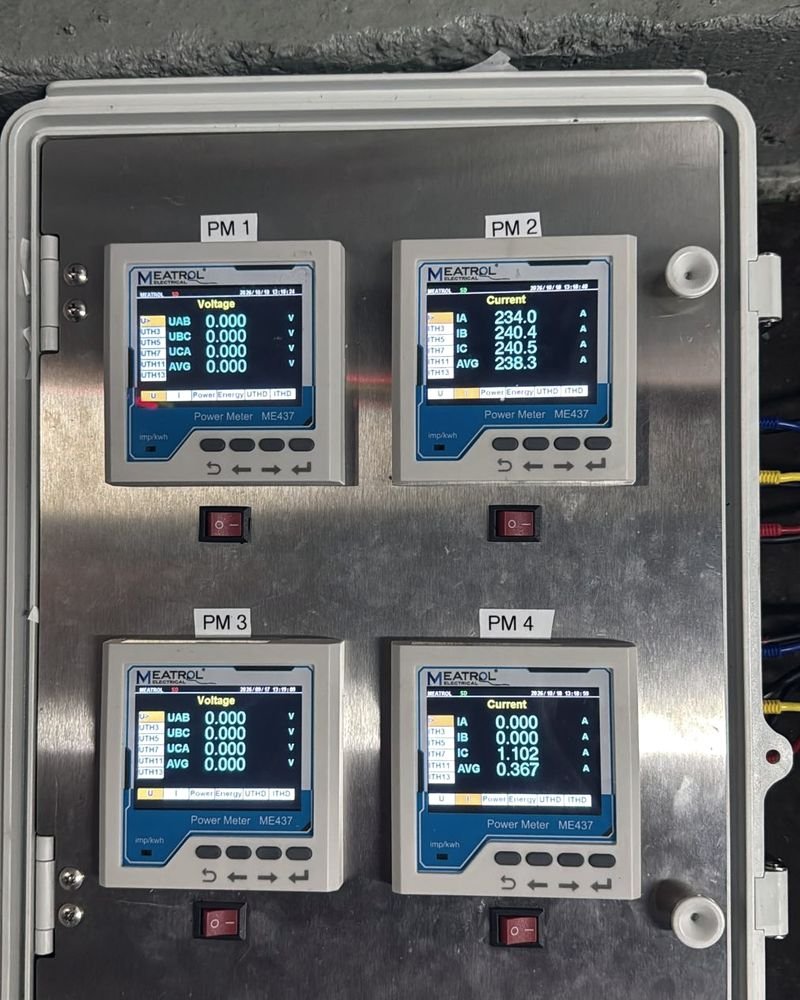
Power analysers go on the incomer and every main feeder. They log day, night and weekend, through a full operating cycle. Before anyone guesses, we know where each kilowatt goes.
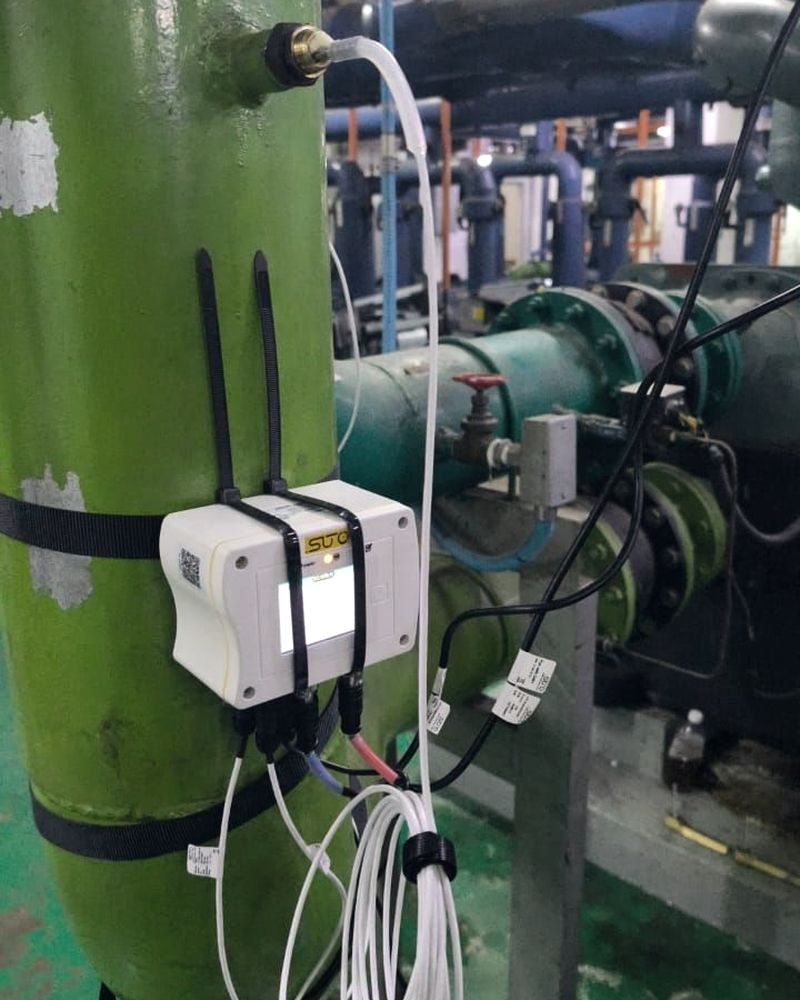
Ultrasonic flow meters and temperature sensors on the chilled-water header give the cooling output. Set against the plant's power, that is kW per refrigeration ton, hour by hour.
Condenser-water temperatures and tower fan power show whether the towers help the chillers or hold them back.
Every floor has air handlers, lighting and lifts, fed from the risers. Fan power and the floor feeders are logged.
One floor never sleeps. We measure the IT load at the PDU, the cooling units and the UPS separately. That shows how much power reaches the servers, and how much goes into keeping them cool.
Each measure comes with its saving, its cost and its payback, worked from measured data. Where a site has solar or a battery, we measure that too, and size any new one last, on the load that is left. We don't sell either. Next: where your site starts.
Find your situationFactories and buildings, local firms and multinationals. Most people come to us with one of these.
Pick the one closest to yoursTap the one closest to yours
We can act as your external Registered Energy Manager (Type II), run the energy audit, and set up the energy management system and the yearly energy efficiency and conservation (EE&C) report.
We start with a preliminary audit, at no fee: your bills, your asset list and a walk-through. Then we tell you which system is worth measuring: the chiller plant, compressed air, a boiler, the switchboard, or the whole site.
Before you sign, we set an independent baseline to IPMVP, the international protocol for measuring savings. After the work, we verify what was actually saved. We don't sell the equipment, so our number does not move with the contract.
If your head office is in Tokyo, Singapore, Europe or the US, we are the local team that knows the Malaysian rules and the plant room. We meter the site, build the energy baseline and set up an energy management system aligned to ISO 50001. Verification and assurance stay with your accredited body.
Our REM assignments cover site visits, review meetings, energy monitoring and the yearly EE&C report, with quarterly or monthly attendance.
We measure the chiller plant, the air side and any data hall on its own, and show what each costs to run. For office buildings we also work out the energy intensity and where it falls on Suruhanjaya Tenaga's one-to-five star scale, before you file.
Under an energy performance contract, we size the savings, set the IPMVP baseline, find the contracting ESCO or funder and verify the results through the term. The contracting ESCO carries the savings guarantee.
We work for other ESCOs as the audit and measurement team: logging, analysis, M&V and reports. Documents can go out under your name, in your client's format.


Government office complex, Putrajaya. It spent RM2.99 million on energy in the baseline year, September 2025 to August 2026: 27,724 GJ (gigajoules, the unit the Act counts in). It buys its cooling as chilled water from a district plant. The audit covered 83.6% of the energy used. Suruhanjaya Tenaga's guideline asks an audit to cover at least 80% of a site's systems, the biggest users first. The figures come from the audit report. The complex is not named. See the factory case →
The first year is no-cost and low-cost work: RM110,510 in all. It saves about RM255,000 a year.
Between midnight and 6 am on weekdays, the load averaged 217 kW. In office hours it averaged 346 kW. The audit does not assume the night load can be switched off. The feeders are checked first.
The energy manager post was vacant for months. In that time energy use rose by about 4,700 GJ a year, and the cause has not yet been identified. That is more than all 16 measures would save.
16 measures over two years, saving 11.85% of the energy used (3,285 GJ a year), or about RM282,000 a year for about RM261,000 of works: a simple payback of about 11 months. Year two is about RM150,000 of work for about RM27,000 a year, resetting the air-handling controls to run as designed. These are engineering estimates from measured data, not yet achieved savings. Energy intensity is 289.4 kWh/m² a year, and 255.1 after all 16 measures. Both sit in the 3 Star numerical band; that is our calculation, not an official Suruhanjaya Tenaga label.
Partner engagement. Innovast was the technical audit team.
Pharmaceutical manufacturing plant, Selangor. A direct Innovast audit. Every figure here was logged on site. The audit covered part of the plant, so no site-wide saving is quoted. The plant is not named. See the office complex →
The plant's two 150 RT air-cooled chillers were logged running at the same time. Each averaged 2.26 kW for every ton of cooling, more than double the limit the audit applied from the Malaysian standard, MS 1525.
On the same site, the 400 RT air-cooled system averaged 0.91 kW for every ton of cooling, against the 1.00 limit the audit applied from MS 1525.
It traced the fault to the changeover wiring between the two machines. Once corrected, they take turns as designed.
Direct engagement. Innovast was the appointed auditor.
Each of these plants was logged every minute for a month, longer than a standard audit. kW/RT is the electricity used for each ton of cooling delivered. Lower is better.
The air-cooled chillers needed more than twice the electricity of the water-cooled plant for the same cooling. Average load 333 RT, peak about 510 RT.
Pumps and cooling-tower fans used about 41% of the plant's energy; none has a variable speed drive. Chilled water came back only 2.08°C warmer than it left, so a lot of water was being pumped for the cooling delivered. Average load 299 RT against 1,350 RT installed.
Partner engagements. Findings only. The hotels are not named.
GreenRE figures, in kW/RT: GreenRE Existing Non-Residential Building reference guide, version 4.0 (2026), ENRB 1-2, minimum plant efficiency. Shown as a reference, not a compliance assessment. The whole-plant and water-cooled figures for Shah Alam have no GreenRE figure beside them: their measurement boundaries differ from GreenRE's.
The Energy Efficiency and Conservation Act 2024 has applied since 1 January 2025. It reaches any site that uses 21,600 GJ or more over twelve consecutive months, in one place, across all the energy types the Act covers, not electricity alone. If it were all electricity, that is 6 million kWh. The duties fall on the company. Failing to appoint a Registered Energy Manager, or to submit a report the Act requires, each carries a fine of up to RM50,000.
Each bar ends at its deadline, marked by the ring. The orange bar is the first yearly report; it then repeats every year. Drawn for a manager appointed on the last day allowed: appoint earlier and the system and yearly-report clocks move earlier with it.
Threshold: Energy Efficiency and Conservation Regulations 2024, reg. 3. Fines: Act 861 ss. 5(3), 7(4), 9(10).
Energy management follows ISO 50001. Audits follow ISO 50002-1 and ASHRAE Level II. Savings are verified to IPMVP. Audit reports for EECA 2024 follow Suruhanjaya Tenaga's guideline, GP/ST/No.49/2024 (Pind. 1/2026).
Also on the team: Certified Professional in Measurement and Verification (CPMV), Certified Energy Manager (CEM), Green Building Index Facilitator. Our team has audited manufacturing plants, pharmaceutical sites, office towers and shopping malls, hotels, hospitals, water and wastewater plants, universities and government buildings.
A factory, a tower or a portfolio. An engineer will reply.
Your bills, your asset list and a walk-through of the site. About two weeks.
No feeWhat is worth measuring, what is not, and roughly what it could save. If nothing needs doing, we say so.
Loggers on the systems that matter, for 7 to 14 days. Then the signed report.
Your contractors or a performance contract do the work. We verify the savings to IPMVP.
A detailed audit logs on site for 7 to 14 days. The report follows about a month after fieldwork. From order to final report, most jobs take 3 to 5 months, including your reviews.
SEDA has not yet announced the next cycle of its energy audit grant (EACG). Where a grant is open, we can help you apply, subject to availability, eligibility and terms and conditions. Our audit does not depend on it.