
Measurement and verification
Was the saving real, or just calculated?
We measure savings on site, to IPMVP, and set up performance contracts on a baseline we measured ourselves. If an ESCO, contractor, solar developer or equipment supplier has promised you a saving, it can be measured.
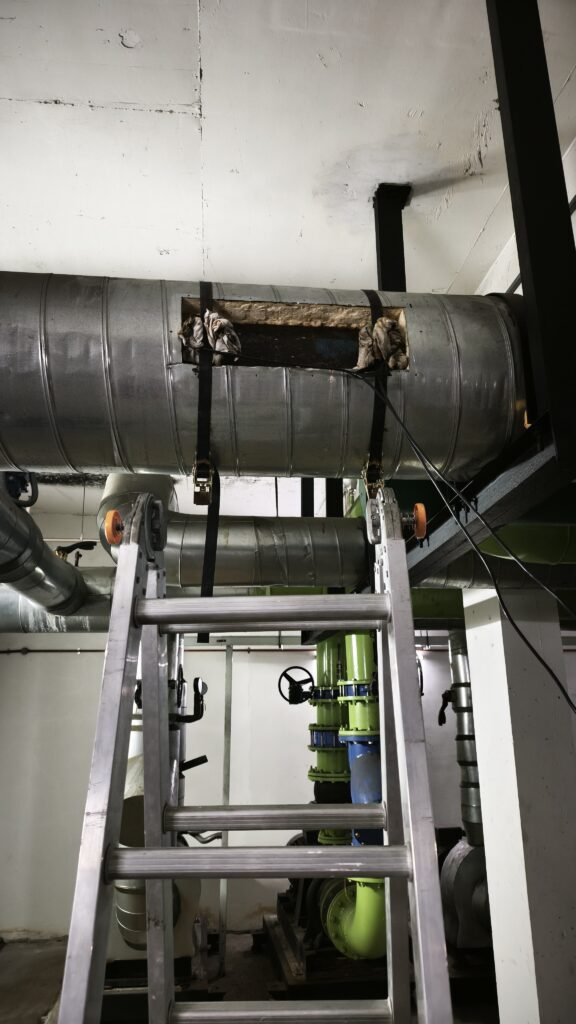
Flow transducers on a chilled water pipe, logging a baseline before anything changes.
Registered ESCO
Protocol
IPMVP · Options A to D
Instruments
Owned by us, calibrated
Reports signed by
Registered Energy Auditor · JTB-2025-0063/002
When it matters
| When | What to do |
|---|---|
| Before you sign | Ask how the saving was worked out, and whether it can be measured once the plant is running. If it cannot, it cannot be defended later either. |
| Before the work starts | Log the baseline. Once the new equipment is in, the old condition is gone for good. This is the step that cannot wait. |
| After it is built | Check each period’s claimed saving against the agreed baseline and method. |
| Years into a contract | Keep checking. Sensors drift, plant is re-tuned and occupancy changes. |
Funding the project? If you lend against it, approve the capital or take a share of the savings, the same checks protect your return, commissioned by you.
Why savings figures fail
In the cases we have seen, it is one of two reasons, often both.
- The price was averaged. Dividing the whole bill by the whole consumption gives one rate per kWh. But a tariff has peak and off-peak energy, a capacity charge on maximum demand and other charges. A chiller upgrade that cuts peak demand saves most of its money in the capacity charge, which an average rate cannot see. The tariff also changed structure on 1 July 2025, so a baseline built on older bills is modelled across both.
- Logged, but not a baseline. A baseline must be complete, isolated, long enough and written down. Common gaps: power logged but not chilled water flow and temperatures; no boundary around the plant; a few days instead of a full billing cycle; no written protocol or calibration record.
Our method, to IPMVP
- Choose the option and write it down. IPMVP has four options, A to D. For a chiller plant it is usually Option B: measure the plant directly.
- Instrument the plant. Flow, supply and return temperature, and power on every chiller, pump and tower fan. Calibrated meters on a common clock.
- Log the baseline before anything changes. About thirty days at one-minute intervals, a full billing cycle, with at least 95% of the data complete.
- Normalise it. Adjust for cooling load and weather, so a hot month does not read as a failure.
- Cost it on the real tariff. Peak and off-peak energy, capacity, network and other charges, each treated separately.
- Attach the plan to the contract. The baseline is fixed, raw data is kept, calibration is traceable, and there is a written way to settle a disputed figure.
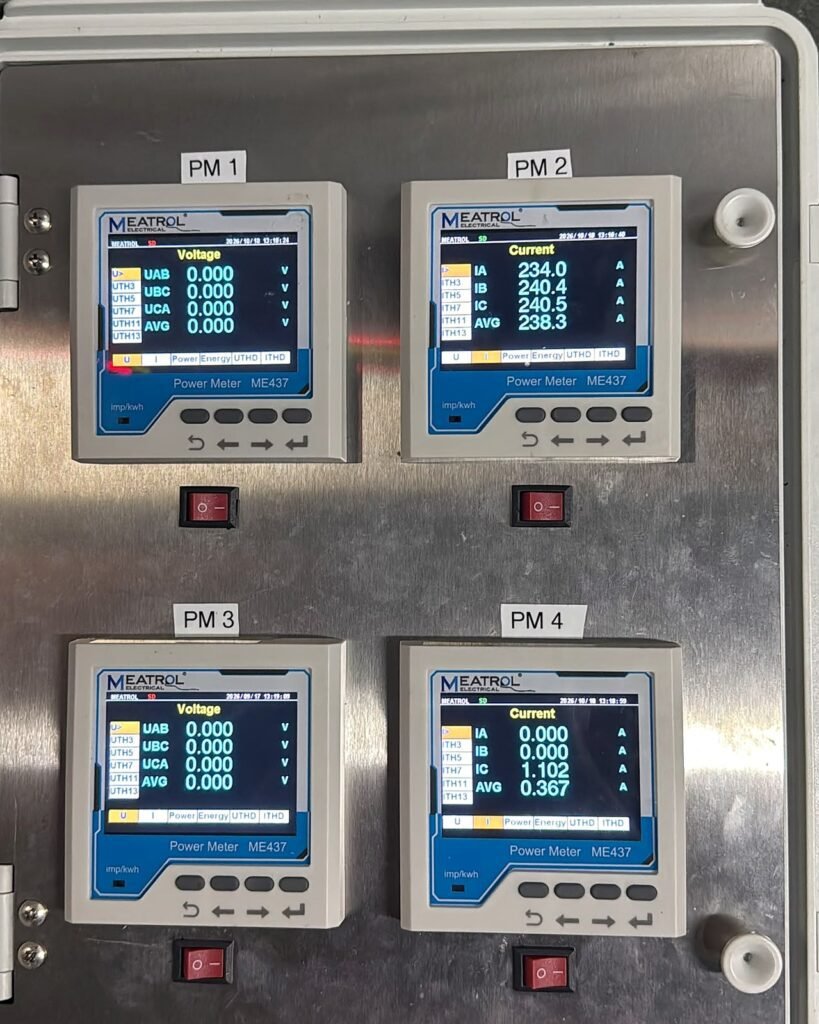
Four power meters in one enclosure, logging four feeders at the same time.
Performance contracts
For measures worth doing when there is no capital budget. A contracting ESCO or a funder puts up the capital and is repaid from the savings, so the savings figure decides the payment. That is why it has to be measured.
| Structure | Who pays for the works | Who carries the risk | In short |
|---|---|---|---|
| Guaranteed savings | You, from your own funds or lender | The ESCO guarantees the savings and pays any shortfall | Cheapest over the term if you can fund the works. You keep everything above the guaranteed level. |
| Shared savings | The ESCO | The ESCO | Repaid from an agreed share of the verified savings. At the end, the whole saving is yours. |
| Energy supply contracting | The ESCO, which owns and runs the plant | The ESCO | You buy the output (chilled water, compressed air, heat) at an agreed rate. |
Our part. We do not own or operate plant, and we do not take the savings guarantee. We do the investment-grade audit that sizes the savings, agree the baseline and measurement plan before anything is installed, help you find and compare a contracting ESCO or funder, and verify the savings each period for the whole term.
Independent, whoever engages us. Owner, funder or contractor: the method is agreed in writing first, our fee does not move with the result, and our reports state who engaged us. If we introduced the contracting party, we tell you first, and you decide whether we or a third party verify.
At the end of the term, the equipment and the whole saving are yours. The number the payment is calculated from is the number you can check.
Our fees
| Engagement | What it covers | From |
|---|---|---|
| Baseline and measurement plan, to IPMVP | Option choice, instruments, baseline logging, normalisation, the tariff model, and the plan written as a contract schedule. The fee moves with the number of assets. | RM40,000 |
| Verification under a contract | Independent checks on your side: after installation, each period, a disputed figure, and metering design for your own projects. | RM15,000 |
| Investment-grade audit | Thirty days of logging and a calibrated model, for a lender or ESCO. Normally carried by the contract if it goes ahead. | RM40,000 |
| Performance contract | Set up on a measured baseline, verified for the term. | No capital from you |
Starting points, not quotations. Where M&V is part of an audit, it is scoped with the audit. ESCO partner rates on application.
All figures are for Peninsular Malaysia. Work in Sabah and Sarawak falls under separate registrations and is not quoted here.
Measure before anything is installed
A verification can start in year three of a contract. A disputed figure can be looked into later. The baseline cannot: once the equipment is in, the condition you needed to measure is gone.
Already running without one? That is common, and it can often be fixed. A baseline can sometimes be rebuilt from billing history, sub-meters and plant data. We will tell you honestly how strong it will be before you commit.
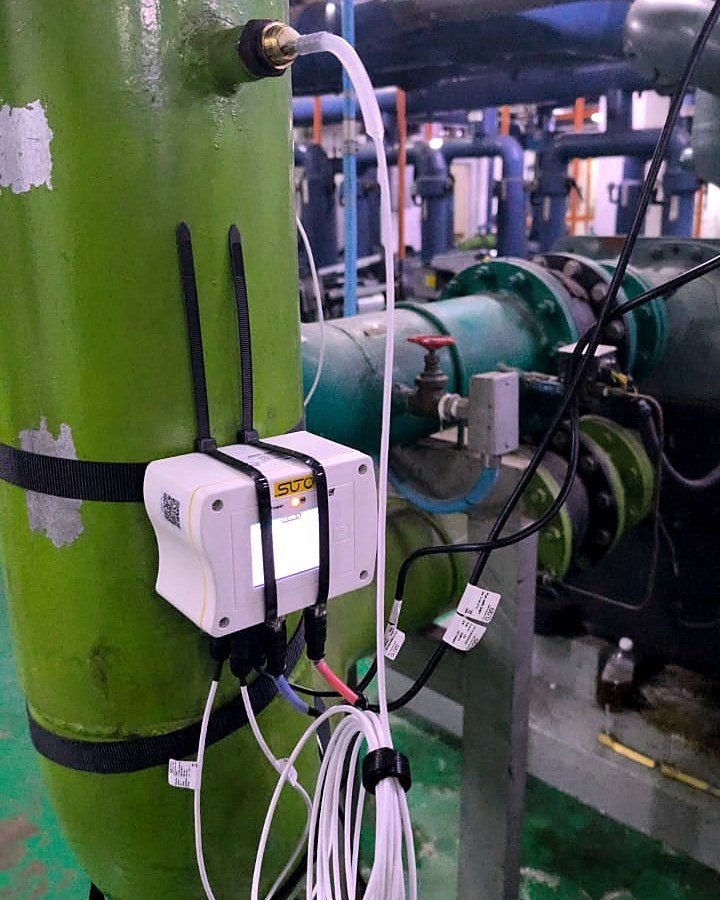
A clamp-on ultrasonic flow meter on a chiller plant pipe.
Related pages
- Energy audits: every audit, the method and the fees.
- Energy management and reporting: the system and the yearly report.
- Registered Energy Manager: a Type II manager when nobody on your staff is registered.
Tell us about your site.
A factory, a tower or a portfolio. An engineer will reply.
We use these details to reply to your enquiry. See our Privacy Notice.
This site is protected by reCAPTCHA and the Google Privacy Policy and Terms of Service apply.
Emaileco@innovast.asia
Phone+60 12 355 6214
OfficeSuite A-5-1, Plaza Mont’ Kiara, 2 Jalan Kiara, Mont’ Kiara, 50480 Kuala Lumpur
The first look costs nothing.
01
Preliminary audit
Your bills, your asset list and a walk-through of the site. About two weeks.
No fee
02
A straight answer
What is worth measuring, what is not, and roughly what it could save. If nothing needs doing, we say so.
03
Measured audit
Loggers on the systems that matter, for 7 to 14 days. Then the signed report.
04
Fix and verify
Your contractors or a performance contract do the work. We verify the savings to IPMVP.
A detailed audit logs on site for 7 to 14 days. The report follows about a month after fieldwork. From order to final report, most jobs take 3 to 5 months, including your reviews.
SEDA has not yet announced the next cycle of its energy audit grant (EACG). Where a grant is open, we can help you apply, subject to availability, eligibility and terms and conditions. Our audit does not depend on it.